

The Royal Navy has begun examining whether its Aster air defence missiles could be integrated with the widely used Mk 41 Vertical Launch System (VLS), a move that could significantly increase flexibility and interoperability across future British warships.
The Ministry of Defence has commissioned a £2 million feasibility study into the potential compatibility of Aster with Mk 41. The year-long work has been awarded directly to MBDA UK, the missile’s manufacturer, which is considered best placed to assess the technical, safety and certification challenges involved.
While the study does not commit the Royal Navy to adopting Mk 41-launched Aster missiles, its findings are expected to help shape long-term decisions on ship design and weapons fit, particularly as the fleet transitions to a more standardised launcher architecture.
Why the launcher matters
The Royal Navy’s Type 45 destroyers currently use the Sylver A50 vertical launch system to fire Aster 30 missiles, with Aster 15 for shorter-range defence having been replaced by Sea Ceptor in separate silos. The Sylver system will remain in service on the Type 45 fleet until the ships are retired.
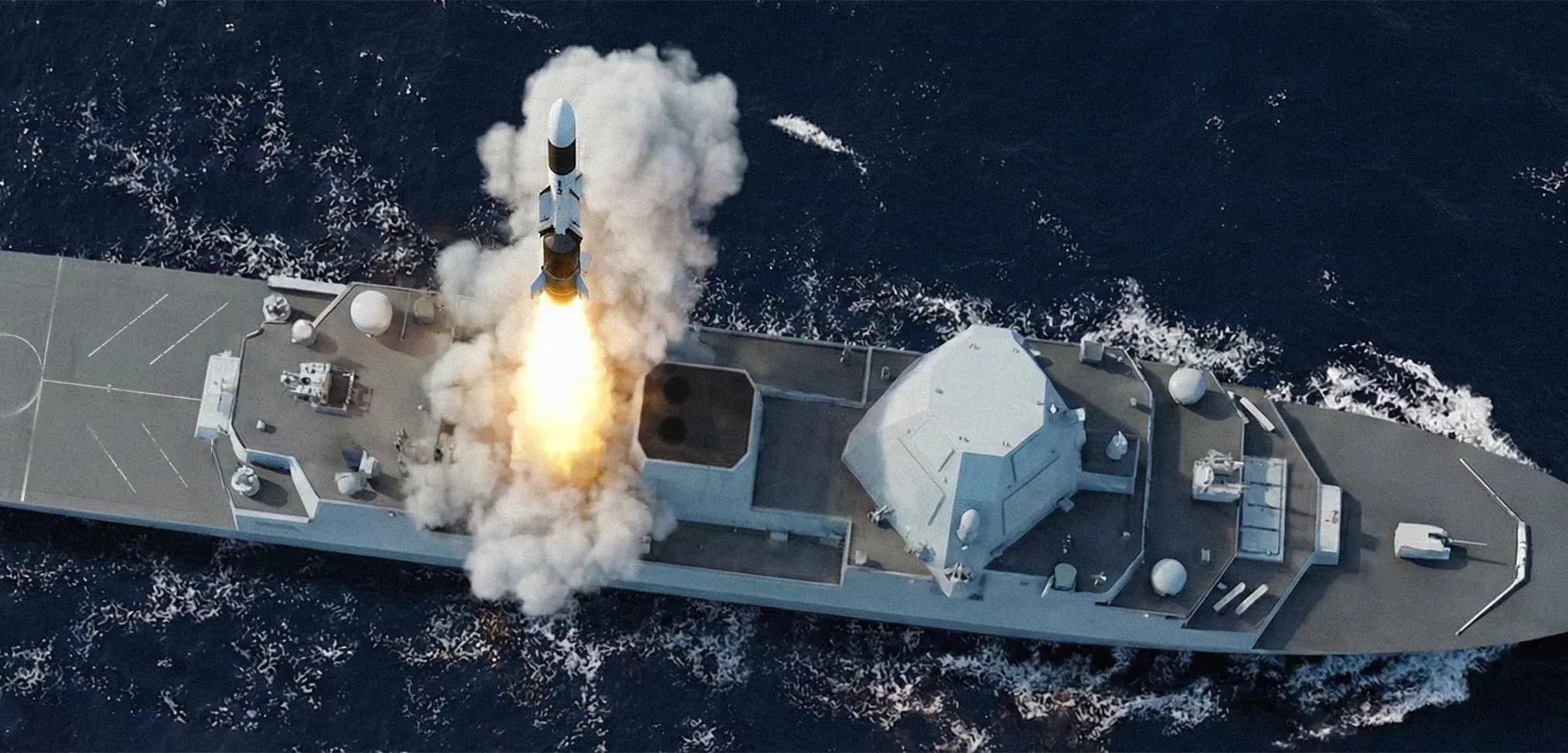
However, newer vessels, including the Type 26 and Type 31 frigates, and likely future surface combatants, are being built around the Mk 41 VLS, which is already in widespread use among allied navies. The system supports a broad range of weapons from multiple manufacturers, including Tomahawk land-attack missiles, Standard air defence missiles, ASROC anti-submarine weapons, and a growing family of interceptors. Like Sylver, Mk 41 also allows smaller missiles to be quad-packed into a single cell.
For the Royal Navy, the appeal lies in both flexibility and interoperability. A common launcher allows ships to carry a mix of weapons and makes it easier to adapt to emerging threats without redesigning ships around a single missile type.
Keeping Aster central
The UK holds a substantial stock of Aster missiles and continues to invest in their development through the Sea Viper Evolution programme. The Aster 30 Block 1 upgrade has recently introduced enhanced software and guidance, delivering a limited ballistic missile defence capability against short-range ballistic threats. France and Italy are also developing the more advanced Aster 30 Block 1NT, designed to counter more complex ballistic and quasi-ballistic missiles.
Aster is expected to play a central role in the Royal Navy’s future air and missile defence architecture, including the Future Air Dominance System (FADS) and the planned Type 83 destroyer. If compatibility with Mk 41 can be achieved, the Navy would be able to retain a proven European interceptor while preserving the option to integrate US or other allied missiles as requirements evolve.
Operationally, Mk 41 compatibility would also offer advantages during coalition operations. Royal Navy ships operating alongside US, Canadian, Norwegian, Australian or other NATO vessels could benefit from shared logistics chains, simplified ammunition stockpiling and, in high-intensity scenarios, the potential for cross-deck resupply.
Industrial and export implications
Retaining Aster within the Royal Navy inventory also supports the UK missile sector, helping sustain sovereign expertise in complex air defence systems. Demonstrating Mk 41 compatibility could enhance Aster’s export prospects, making it accessible to navies that have standardised on the US launcher but wish to avoid reliance on the expensive US-made Standard Missile family.
Such a move would further separate missile choice from launcher choice, reflecting a broader shift among modern navies towards adaptable weapon architectures in response to rapid technological change.
Significant work still required
Integrating Aster with Mk 41 would require more than minor modification. A new Mk 41-compliant canister would be needed, rather than adapting existing Sylver designs. Mk 41 strike-length cells are both deeper and wider than Sylver cells, demanding redesigned support structures, handling interfaces and restraint systems.
The two launchers also differ in how they manage exhaust, power supply, safety interlocks and built-in testing. Mk 41 relies on a shared exhaust plenum, while Sylver uses individual exhaust management per cell, requiring careful redesign of canister bases and sealing arrangements.
Before operational clearance could be granted, the missile-launcher combination would need to pass extensive safety and certification testing, including assessments of shock, vibration, inadvertent ignition, cook-off behaviour and the risk of sympathetic detonation, particularly critical in strike-length cells.
A signal of future thinking
Commissioning the study does not guarantee that Aster will ultimately be cleared for Mk 41, nor that the Royal Navy will choose to pursue full integration. Technical risk, certification complexity and cost will all factor into any final decision.
However, the move signals a growing recognition that future Royal Navy warships must be built for adaptability, able to integrate a wider range of weapons as threats, alliances and technologies continue to evolve.