


Britain would have little trouble spotting a ballistic missile launch aimed at its territory. The real challenge, defence experts warn, is stopping it.
Retired Air Marshal Greg Bagwell, a former senior Royal Air Force commander, says the UK has a clear understanding of the ballistic missile threat but lacks sufficient defensive capability to counter it effectively.
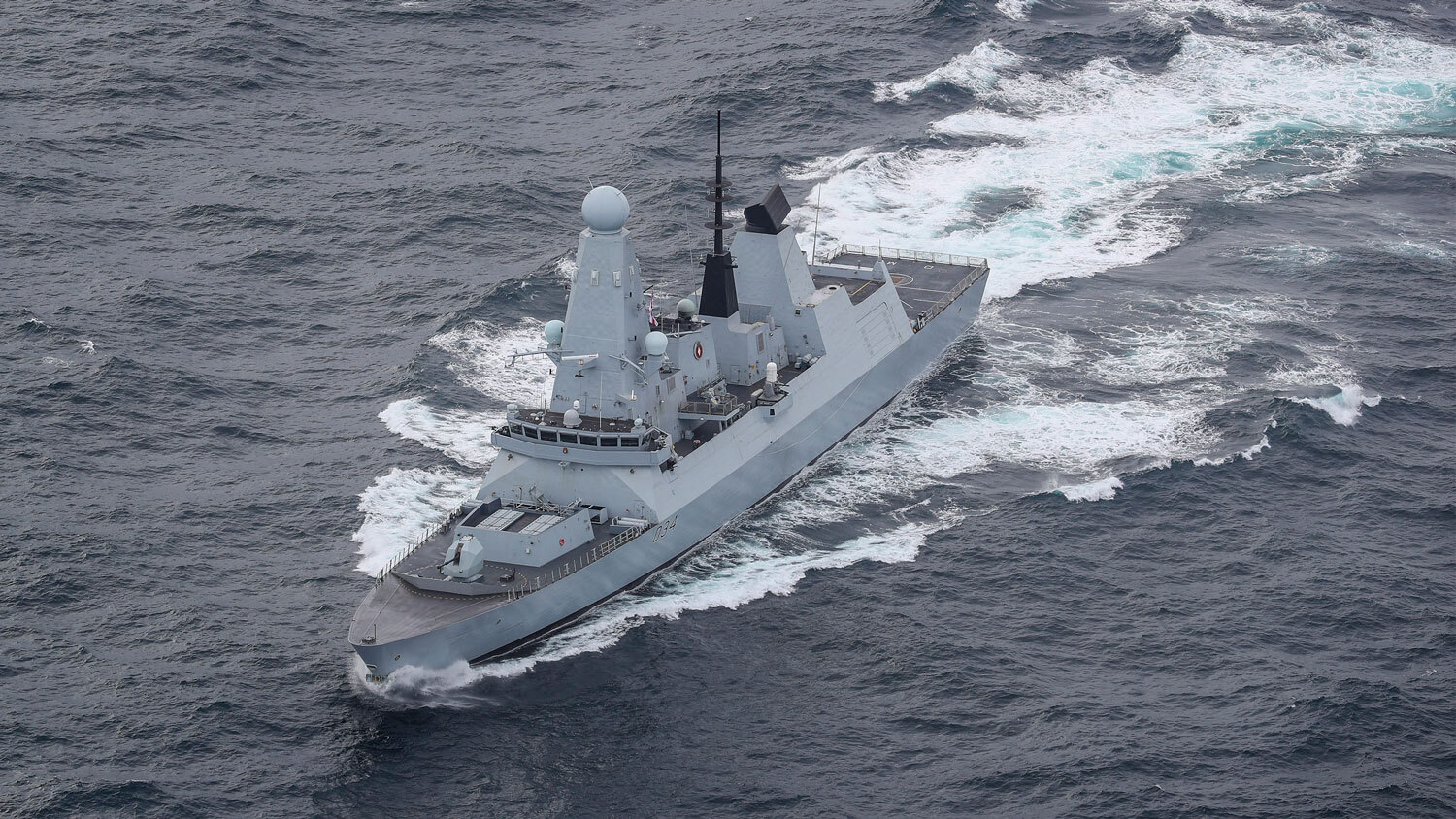
Ballistic missiles, which can carry either conventional or nuclear warheads, travel high into space before descending at extreme speed towards their target. According to Bagwell, Britain currently has only one means of intercepting such a weapon: the Royal Navy’s Type 45 destroyers.
Although six of the advanced warships are in service, routine maintenance and refits have reduced the number available at sea to just two or three in recent years.
Awareness Without Coverage
Bagwell, now president of the Air & Space Power Association, rejected claims that the UK has overlooked the threat.
“This is not a blind spot,” he said. “It’s something we’re well aware of, but the solutions that would guarantee protection are prohibitively expensive and technically complex.”
He cautioned against comparisons with Israel’s Iron Dome air defence system, often cited by politicians as a model.
“An Iron Dome-style shield doesn’t translate to the UK,” Bagwell said. “Even in the United States, it’s questionable whether such total protection exists.”
Israel’s system, he noted, is designed to defend a small area against predictable threats. Replicating that level of coverage across the UK would require funding on a scale far beyond current defence budgets.
Near the Nuclear Threshold
Bagwell also warned that ballistic missiles occupy a uniquely dangerous space in modern warfare. Even a conventional strike could be misinterpreted as nuclear, dramatically raising the risk of escalation.
“These weapons sit extremely close to the nuclear threshold,” he said. “Any launch against the UK would be viewed in the context of all-out war.”
Because of that risk, Bagwell believes adversaries may hesitate to use ballistic missiles against a nuclear-armed state. However, he stressed that deterrence alone cannot substitute for preparedness.
He argued that Britain must improve its industrial capacity to sustain prolonged conflict, alongside strengthening military capabilities and public resilience.
High Costs, Limited Returns
The government’s Strategic Defence Review 2025 has pledged up to £1 billion for homeland air and missile defence. Bagwell questioned how much protection that funding could realistically provide.
“That amount would purchase a single Patriot missile battery,” he said. “And one battery does not defend a nation.”
He suggested that any meaningful improvement in missile defence would require a coordinated Nato effort, potentially focusing on European-developed systems rather than reliance on costly US technology such as the Patriot system currently used in Ukraine.
Technology Gaps Remain
Emerging laser-based weapons, known as Directed Energy Weapons, are being developed in the UK, but Bagwell said they are only effective against slower targets such as drones.
“They require time to track and engage a target,” he said. “That makes them unsuitable for ballistic missiles.”
When assessing the global threat landscape, Bagwell said China presents the most serious long-term challenge, alongside concerns over Russia, Iran and North Korea.
“Future conflict scenarios involving China are on a completely different scale,” he said. “Managing that relationship without sliding into confrontation is critical.”
Even the most advanced defence systems offer no guarantees, he added, pointing to breaches experienced by both Ukraine and Israel despite their layered air defences.
“Perfect protection doesn’t exist,” Bagwell said. “The goal is to manage risk, not eliminate it.”