


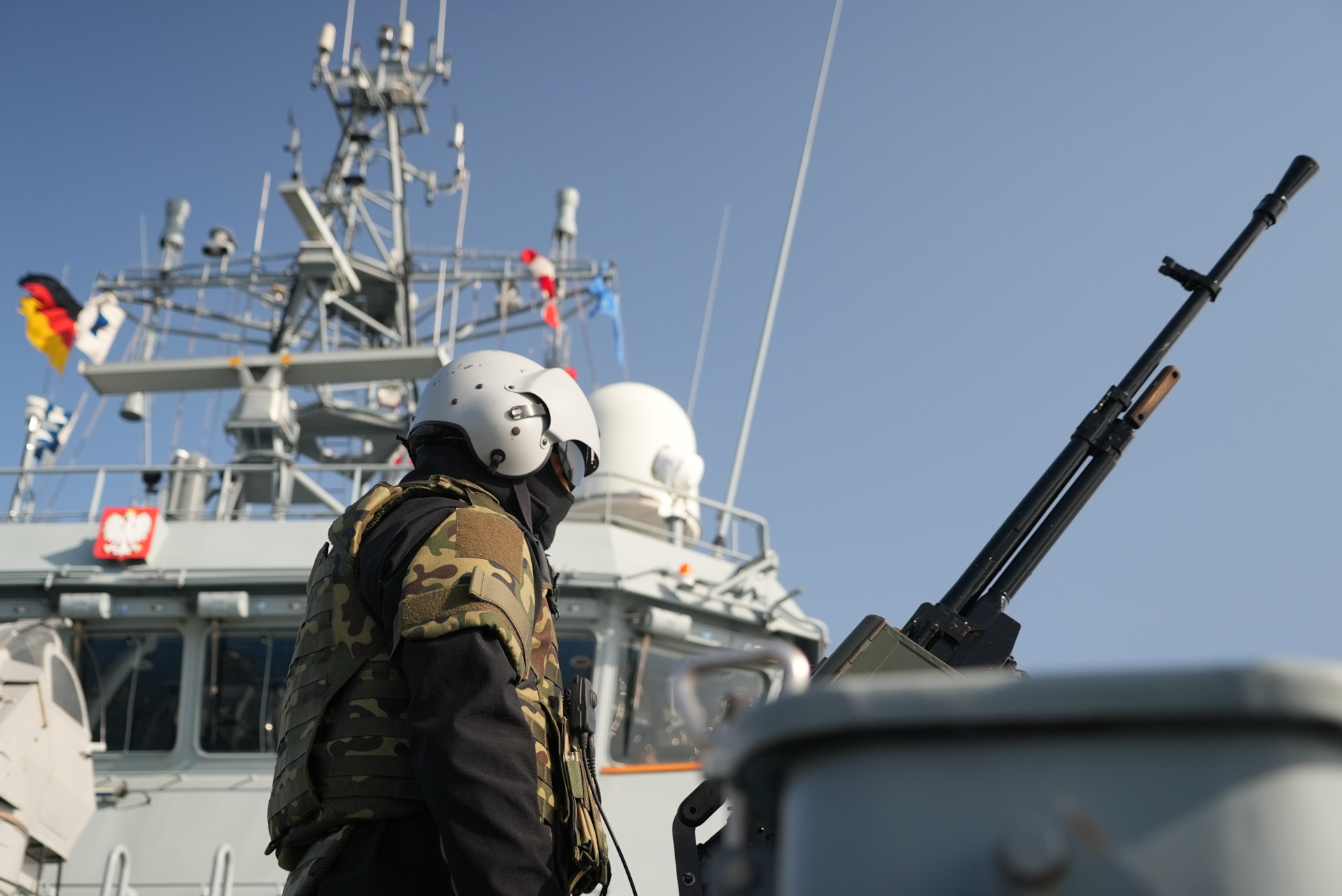
NATO has intensified its maritime operations in the Baltic Sea amid growing concerns over suspected attempts to sabotage critical undersea infrastructure.
Sailors aboard the Polish warship ORP Czernicki are currently engaged in an active mission as part of Baltic Sentry, a surveillance and monitoring operation launched in January 2025 following a rise in incidents involving damaged cables and pipelines.
The deployment marks a significant escalation in efforts to protect key communication links that carry vast amounts of internet and data traffic between Europe, including connections involving the United Kingdom and Norway.
Lieutenant Commander Thomas Støkket, Chief of Staff aboard the Czernicki, said any disruption to these cables could have serious consequences.
He warned that while such damage may not completely paralyse societies, it would significantly hamper communications between major countries.
Strategic Pressure in a Contested Region
The Baltic Sea has become a focal point for NATO operations due to its strategic importance and concentration of undersea infrastructure.
Nine countries border the sea, Germany, Poland, Lithuania, Latvia, Estonia, Finland, Sweden, and Denmark, all NATO members, while Russia maintains access via St Petersburg and the enclave of Kaliningrad.
The region’s only narrow maritime exit through the Danish straits into the North Sea further heightens its strategic sensitivity.
Suspicious Incidents Raise Concerns
NATO officials have pointed to repeated incidents involving merchant vessels dragging anchors across the seabed, sometimes over long distances and near critical infrastructure.
While no direct attribution has been made publicly, Lt Cdr Støkket acknowledged that such occurrences are unlikely to be purely accidental.
Faster Response Times
According to Commander Kacper Sterne, Commanding Officer of the Czernicki, NATO’s response capabilities have improved significantly since the launch of the Baltic Sentry.
He said response times to incidents have been reduced from approximately 17 hours to just one hour, allowing forces to react more quickly to potential threats.
Use of Underwater Drones
As part of the operation, NATO vessels are deploying advanced underwater systems to monitor and inspect infrastructure on the seabed.
On board the Dutch minehunter HNMLS Scheidam, crews use autonomous and remotely operated vehicles, including the REMUS underwater drone and Seafox drone, to detect damage or potential explosive devices.
Lieutenant Commander Edo, the vessel’s commanding officer, said the equipment enables detailed inspections of pipelines and cables and can identify attempts to interfere with infrastructure.
Increased Russian Activity
NATO personnel have also reported an increase in Russian maritime activity in the region.
Commander Michael Voigt, of the German minehunter FGS Fulda, said Russian “shadow fleet” vessels are frequently observed transiting the Baltic, often accompanied by naval escorts.
The presence of these escorts suggests an adjustment in Russian operations in response to NATO’s increased monitoring.
Ongoing Security Challenge
While NATO officials say Baltic Sentry has improved surveillance and response, incidents involving undersea infrastructure have not been completely eliminated.
However, the enhanced presence has made it more difficult for any potential sabotage activity to go undetected.
The situation highlights the growing importance of protecting undersea infrastructure, which underpins global communications and economic stability, as tensions between NATO and Russia continue.