

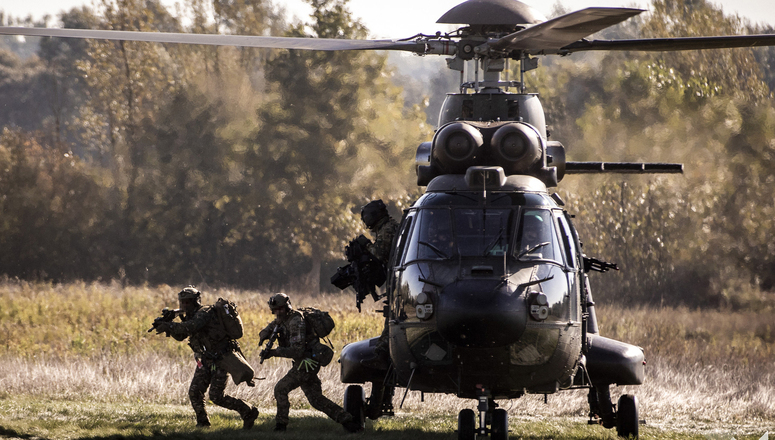
A new era of regional defence cooperation has begun in Central Europe, as the Regional Special Operations Component Command (R-SOCC), led by Hungary has officially reached full operational capability.
The milestone means Austria, Croatia, Hungary, Slovakia, and Slovenia now have a fully deployable multinational headquarters capable of commanding special operations missions together, or supporting NATO and EU-led operations when required.
The achievement significantly boosts the region’s ability to respond rapidly and effectively to emerging threats. It also allows each participating nation to retain control of its own special forces while ensuring they can operate seamlessly under a combined multinational command structure when needed.
R-SOCC follows in the footsteps of the successful Composite Special Operations Component Command (C-SOCC), a similar initiative between Belgium, Denmark, and the Netherlands that became fully operational in 2020.
The project was first launched in February 2019, when defence ministers from the five nations signed a Letter of Intent, followed by a Memorandum of Understanding later that year, signed by Croatia, Hungary, Slovakia, and Slovenia in October 2019, and by Austria in December 2020.
Defence officials hailed the move as a landmark in multinational military cooperation, showcasing Central Europe’s growing role in strengthening NATO’s readiness and interoperability.
“R-SOCC is a clear demonstration of what can be achieved when nations pool their expertise and capabilities,” said a senior NATO official. “It enhances regional stability and contributes directly to the Alliance’s overall preparedness.”