

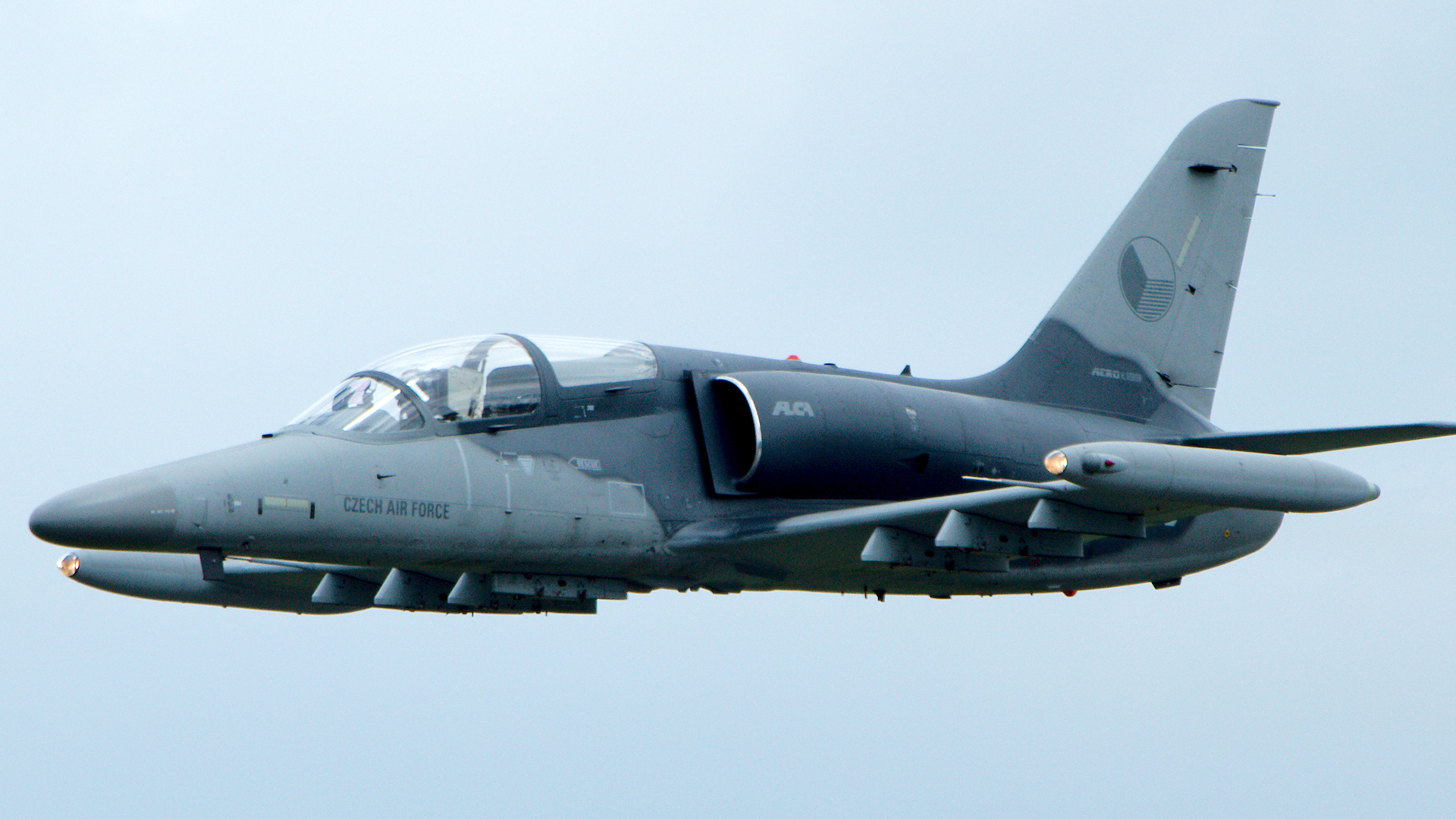
Ukraine appeared set to receive a boost to its air defences after the Czech president promised combat aircraft capable of hunting down drones, only for the plan to be abruptly halted by the country’s prime minister.
The Czech Republic had been expected to supply Ukraine with the Aero L-159 Alca, a light combat jet well suited to intercepting drones and loitering munitions. The pledge was made last week by Czech President Petr Pavel during a visit to Kyiv, where he met Ukrainian President Volodymyr Zelensky.
However, the proposal has now been rejected by Prime Minister Andrej Babiš, who said the Czech armed forces do not have enough aircraft to spare.
Limited fleet
The Czech air force is believed to operate around 24 L-159 jets, with each aircraft estimated to be worth approximately $800,000. Prime Minister Babiš told a press conference following a cabinet meeting that the jets were needed for domestic defence and could not be transferred to Ukraine.
The L-159 exists in several configurations, including a single-seat variant used for ground attack and training, as well as a two-seat trainer version.
While the aircraft is no longer the backbone of the Czech air force, it remains an important part of the country’s capabilities. The Czech Republic’s primary fighter force currently consists of Swedish-built JAS-39 Gripen jets, with plans to transition to the US-made F-35 Lightning in the future.
Prague has ordered 24 F-35s, but deliveries are not expected to begin until after 2030.
Why the L-159 mattered to Ukraine
Military analysts have long viewed the L-159 as particularly well suited to countering drone threats. Unlike advanced fast jets such as the Gripen or F-35, the L-159 flies at subsonic speeds, making it more efficient against slow-moving targets.
For comparison, an Iranian-made Shahed drone typically travels at around 115mph. The L-159 has a top speed of 582mph, while the Gripen can reach 1,535mph.
Although fast jets can shoot down drones, doing so is often inefficient. Missiles used by advanced fighters can cost far more than the drones they destroy, and the operating and maintenance costs of aircraft such as the Gripen or F-35 are significantly higher.
The L-159, by contrast, can be fitted with a ventral gun pod, allowing it to engage cheaper, slower targets more economically. While it can also carry missiles via multiple hardpoints, the aircraft is seen as a practical and cost-effective option for air defence against drones.
Conflicting messages from Prague
President Pavel had spoken confidently about the potential transfer. Standing alongside President Zelensky, he said the Czech Republic could “in a relatively short time provide several medium combat planes” that were “highly effective in fighting drones”.
He also indicated that Prague could supply early-warning systems, including passive radar technology, although it remains unclear whether this proposal will also face opposition from the prime minister.
A former army general and ex-chair of NATO’s Military Committee, President Pavel has been a vocal supporter of Ukraine. He has backed the Czech-led initiative to supply Kyiv with large-calibre ammunition, funded by Western donors.
Under the previous Czech government, Ukraine received significant military equipment from Prague, including tanks and helicopters, with the Czech Republic compensated by NATO allies as it rearmed with Western systems.
For now, however, the promised L-159 jets appear to be off the table, highlighting growing tensions within Prague over how far the country should go in supporting Ukraine’s war effort.