

It was one of the deadliest nights of the Troubles, a moment that changed the trajectory of the conflict and continues to echo through British politics nearly four decades later. And now, with the Government preparing to repeal the Legacy Act, the events of that night in 1987 are once again under the microscope.
Because for many veterans, what happened at Loughgall wasn’t just another firefight, it was the defining operation of a brutal and shadowy war. And they fear that reopening investigations risks turning soldiers into suspects.
The Night Everything Changed
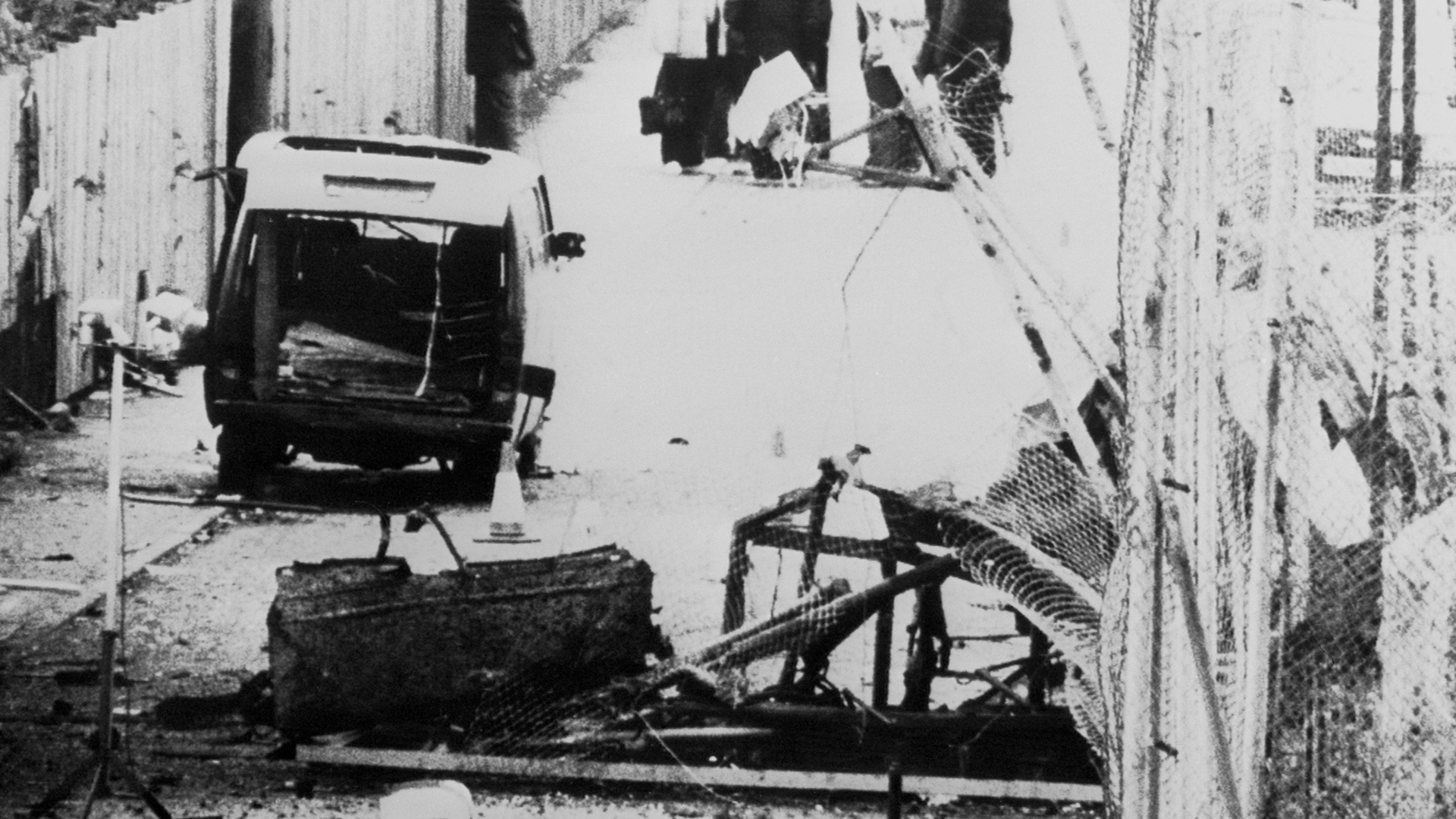
On 8 May 1987, eight members of the Provisional IRA drove a digger carrying a massive bomb straight into the front gates of the RUC police station in Loughgall, South Armagh.
The explosion tore through half the building.
What the IRA didn’t know was that the SAS were lying in wait. Their response was swift, and deadly.
All eight IRA men were shot dead, as well as an innocent civilian caught in the crossfire.
The ambush was devastating for the IRA. For the British Armed Forces, it was hailed as a major success in an exceptionally dangerous war.
The Heart of Today’s Controversy
Fast forward to the present day, and Loughgall now sits at the centre of the row over the Government’s decision to repeal the 2023 Legacy Act, which had sought to limit prosecutions for Troubles-era incidents.
In October, Northern Ireland Secretary Hilary Benn confirmed that nine inquests will now be restored, Loughgall among them, because a prior inquiry had already been initiated under the 2015 Conservative government.
Many Armed Forces veterans are furious. They argue the operation was lawful, proportionate, and necessary, and fear that revisiting it is an attempt to recast soldiers as criminals, rather than combatants in a war they never asked for.
A War Fought in the Shadows
Throughout the 1980s, rumours circulated of an unofficial SAS “shoot-to-kill” policy — the idea that IRA operatives caught in the middle of attacks would almost always be met with lethal force.
Several controversial operations fed into this perception:
Drumnakilly, 1988
Days after eight soldiers were killed in the Ballygawley bus bombing, the SAS shot dead three IRA men attempting to murder an off-duty Ulster Defence Regiment member.
Coagh, 1991
Three more IRA members were killed during another attempted attack on a UDR man.
Clonoe, 1992
Four IRA men died after launching an assault on a police station in Coalisland.
Operation Flavius, Gibraltar, 1988
One of the most infamous operations: two IRA men and a woman were shot dead by the SAS. They were unarmed at the time, though a car packed with explosives was later found in Spain. The incident sparked the controversial documentary Death on the Rock and a wave of angry debate.
The aftermath spiralled further: at the Gibraltar victims’ funerals, loyalist Michael Stone launched a grenade and gun attack, killing three mourners. Days later, two British corporals drove into a Republican funeral procession by mistake, were dragged from their car, beaten and shot dead, an atrocity that Margaret Thatcher later described as “among the worst things in my life”.
Loughgall: The Biggest Blow to the IRA
While many special forces operations rattled the IRA, Loughgall was different.
The SAS had wiped out two entire Active Service Units of the highly effective East Tyrone Brigade, a staggering loss for the organisation.
British soldiers referred to IRA members as “players”.
PIRA members saw themselves as soldiers in their own war.
And caught between those perspectives were the young troops patrolling Ulster’s streets and fields, often exhausted, always on edge, told they had four seconds to react if they encountered an armed attacker.
Most never saw the IRA at all. But the special forces? They were fighting a separate war in the shadows, one shaped by infiltration, intelligence, and pre-emptive strikes.
History, Law and the Battle Over Memory
In many ways, today’s debate over the Legacy Act isn’t about paperwork. It’s about identity, morality, and who gets to write the story of the conflict.
Veterans argue they acted within their rules of engagement and that, in the heat of an attack, the SAS did exactly what they were trained to do.
They also point out a grim truth:
If a British soldier was captured by the IRA, they would not survive.
Yet soldiers were expected, by law, to arrest IRA members alive where possible.
The SAS ambushes, they say, weren’t rogue operations. They were the British state hitting back at an enemy that hid in shadows, used compartmentalised four-person cells, and carried out deadly, meticulously planned attacks.
With the Legacy Act now set to be repealed, many feel history is being reopened, and that the war, in a sense, is coming back to them.