

As tensions in the Middle East intensify, Britain is confronting an uncomfortable question: if its interests are directly targeted, how well equipped is it to respond?
The expansion of President Donald Trump’s conflict with Iran to include a British base in Cyprus has sharpened concerns in Whitehall. Defence analysts warn the UK lacks sufficient air defences and has only limited capacity to retaliate effectively.
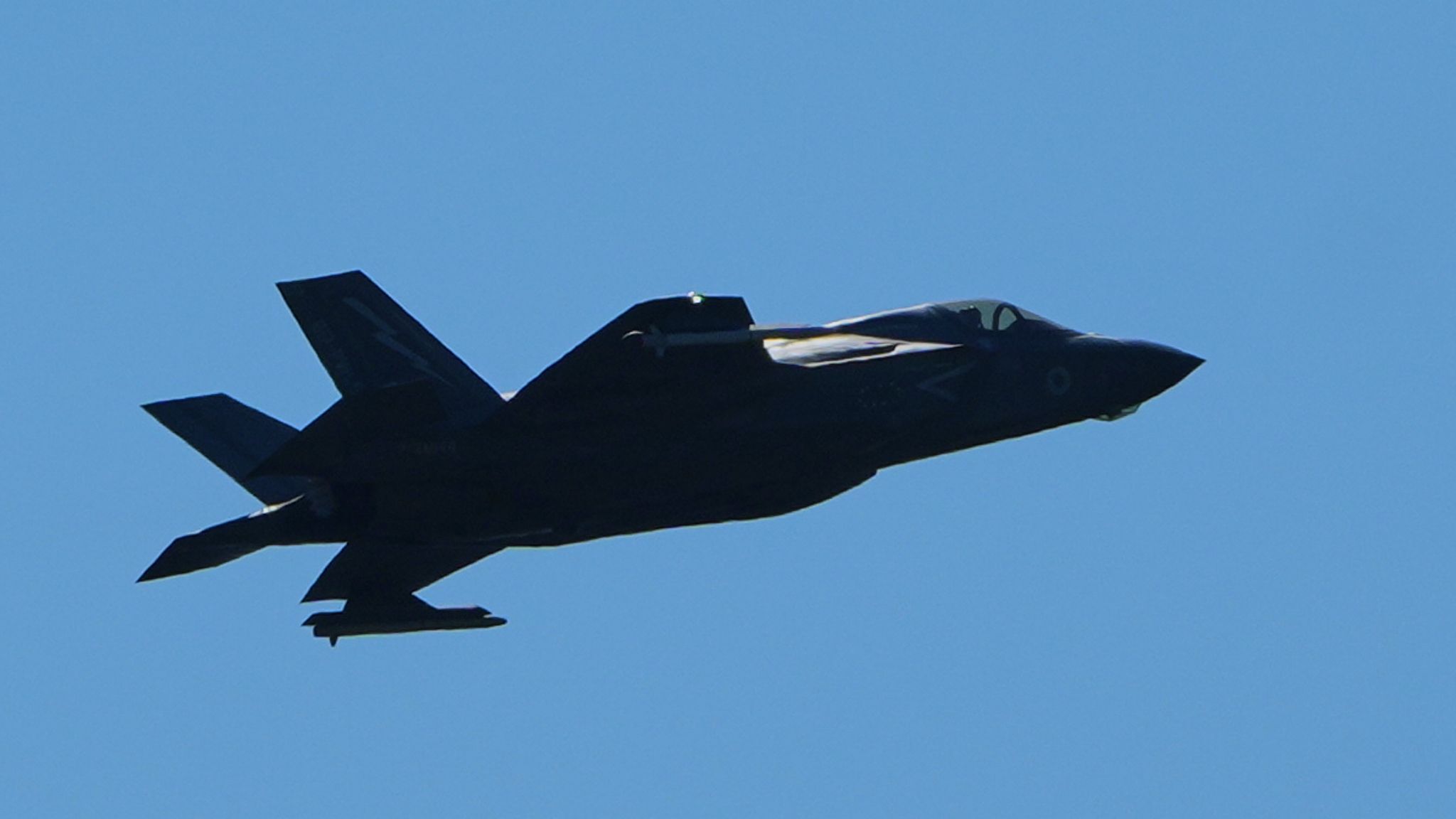
Prime Minister Keir Starmer has sought to reassure the public, pointing to the reinforcement of British forces in the region. A squadron of Typhoon fighter jets has been deployed to Qatar, while six F-35 aircraft are operating from RAF Akrotiri in Cyprus.
However, while both aircraft are highly advanced, they are not ideally suited to countering low-cost drones. Their air-to-air missiles are significantly more expensive than the threats they would be used to destroy. Although capable of intercepting cruise missiles, a more efficient system for that task would be the Army’s Sky Sabre air defence system — and it remains unclear whether it has been deployed.
The Ministry of Defence has confirmed that specialist ground troops trained in counter-drone operations are in the region. Nevertheless, they were unable to intercept a single attack drone that crashed on a runway at RAF Akrotiri on Sunday night.
A more serious concern is Iran’s stockpile of short and medium-range ballistic missiles. While Tehran does not possess intercontinental missiles capable of reaching the UK mainland, its weapons can reach Cyprus and much of the Middle East.
At present, the only British platform capable of intercepting such ballistic missiles is the Type 45 destroyer. The Royal Navy operates six of these advanced warships, but only three are listed as operational, with just one ready for immediate deployment. As of Monday, none were believed to be stationed in the region.
A decade ago, Britain maintained a far stronger naval presence in the Gulf, with at least one, and sometimes two, large warships operating from Bahrain, supported by four minehunters and a substantial logistics vessel. Today, there are no permanently crewed Royal Navy ships based there.
Instead, the UK is relying heavily on the United States’ naval presence, including aircraft carriers and accompanying warships, to counter the ballistic missile threat to British interests in Cyprus and across the Middle East.
This reliance is particularly stark given the scale of Britain’s footprint in the region. Several thousand UK troops are stationed across Cyprus, Qatar, Bahrain, the United Arab Emirates, Jordan, Kuwait, Oman, Iraq and Israel. In addition, around 300,000 British nationals are believed to be living in the area.
On Sunday, Sir Keir reversed a previous decision not to permit US warplanes to launch strikes on Iran from British bases. He said the request was legitimate under the principle of self-defence, provided American forces targeted only Iran’s ballistic missile stockpiles and launch systems.
The Prime Minister stressed that Britain is not currently participating directly in offensive operations. However, that stance could change if further British assets are struck, raising further questions about the UK’s ability to conduct sustained military action.
Typhoon jets, and to a lesser extent F-35s, are capable of carrying munitions that could destroy Iranian missile launchers, according to Matthew Savill, director of military sciences at the Royal United Services Institute (RUSI). Armed with Storm Shadow cruise missiles, Typhoons could also target the entrances of heavily fortified underground missile depots, rendering them unusable.
Yet analysts suggest a larger and more powerful weapon would be preferable. The most effective option would likely be a Tomahawk cruise missile launched from one of the Royal Navy’s attack submarines.
Here too, capability is constrained. The UK’s fleet of five Astute-class submarines has faced maintenance challenges and crew shortages, leading to periods when none were deployed at sea. Although availability has improved somewhat, the government recently disclosed that HMS Anson was visiting Australia, a deployment far removed from the current crisis zone.
Defence insiders acknowledge that the strain now visible is the result of decades of underinvestment by successive governments. Limited stockpiles of air defence systems, missile interceptors and offensive munitions have left Britain heavily dependent on allies at a moment of heightened geopolitical risk.
As the conflict widens and threats multiply, the consequences of those decisions are coming into sharper focus.