

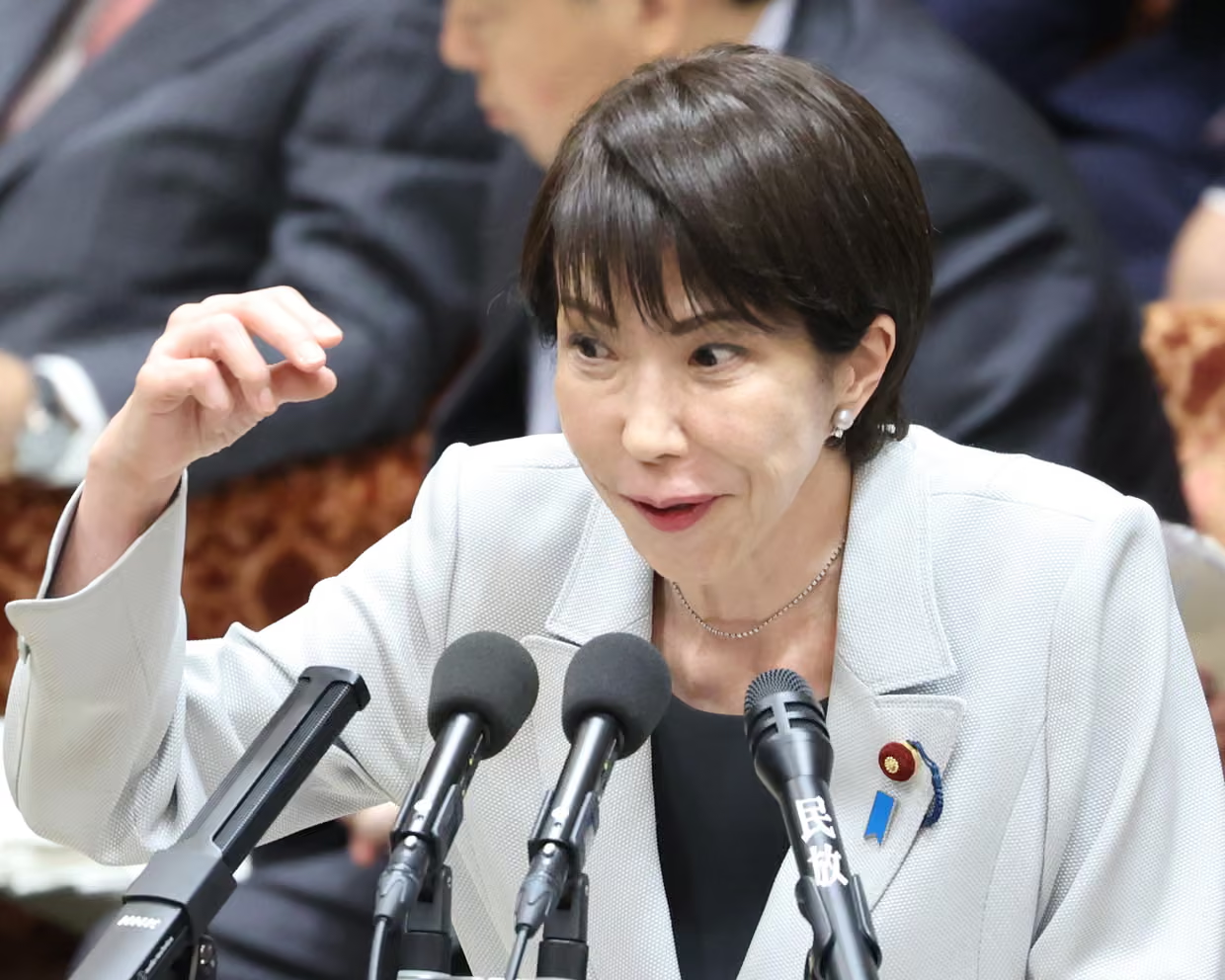
Japan’s new Prime Minister, Sanae Takaichi, has ignited a furious diplomatic row with China after warning that any attack on Taiwan could see Japan’s Self-Defence Forces deployed, if the crisis threatened her nation’s survival.
Beijing hit back with outrage, accusing Tokyo of crossing a red line. The backlash turned toxic over the weekend after a Chinese diplomat in Osaka appeared to post a violent threat online — saying China would “cut off that dirty neck”, before swiftly deleting the message. Tokyo slammed the comments as “extremely inappropriate” and lodged a formal protest.
“We must prepare for the worst”
In her most direct statement since taking office, Takaichi told MPs that Japan had to “anticipate a worst-case scenario” in the Taiwan Strait.
“If an emergency in Taiwan involved warships and the use of force, then that could constitute a situation threatening Japan’s survival, whichever way you look at it,” she said during a parliamentary session.
The comments make clear that Japan, long cautious about taking a hard line, is now openly weighing military options if a conflict over Taiwan spills across its doorstep. The island lies just 100 kilometres from Japan’s westernmost territory, Yonaguni, putting any confrontation uncomfortably close.
China fumes, tensions rise
Beijing, which claims Taiwan as its own and has never ruled out using force to seize it, reacted with fury. Foreign ministry spokesperson Lin Jian accused Japan of making “wrongful and dangerous” remarks, warning Tokyo to “reflect on its historical culpability” and to stop sending “wrong signals to Taiwan independence separatist forces.”
The fallout deepened after Xue Jian, China’s consul general in Osaka, made his now-infamous post on X (formerly Twitter), one that Japanese officials said went far beyond acceptable diplomatic behaviour. Japan’s government spokesperson, Minoru Kihara, confirmed that Tokyo had demanded its removal and condemned other “inappropriate remarks” by Xue.
In Taipei, Taiwan’s presidential office said Beijing’s threats “clearly exceed diplomatic etiquette” and reaffirmed that Taiwan’s government “takes seriously the threatening remarks made by Chinese officials toward Japan.”
Washington backs Tokyo
The United States also waded in. George Glass, the US ambassador to Japan, took to X to say, “The mask slips – again,” accusing the Chinese diplomat of threatening both Takaichi and the Japanese people.
It marks a fresh flashpoint in an already fraught relationship between Japan and China, and one that could have serious implications for the broader Indo-Pacific balance.
From diplomacy to defiance
Just days before the row erupted, Takaichi met President Xi Jinping at the Apec summit in South Korea, where both leaders vowed to build “constructive and stable” ties. But any goodwill from that meeting evaporated almost instantly.
Takaichi, a known conservative and political protégé of the late Shinzo Abe, became Japan’s first female prime minister only last month. Her stance on China has always been hawkish, and her latest comments suggest she intends to continue Abe’s policy of strengthening Japan’s security posture in the face of Beijing’s growing assertiveness.
Tokyo’s 2015 security law, passed under Abe, already allows Japan to use collective self-defence, meaning it can come to the aid of an ally, such as the United States, even if Japan itself isn’t directly attacked. That framework could see Japanese forces support US-led operations in a Taiwan contingency.
A delicate balancing act
Takaichi has since told MPs she would be cautious about discussing specific security scenarios but stopped short of retracting her remarks. Her message is clear: Japan won’t sit idly by if the region descends into conflict.
Beijing, meanwhile, shows no signs of backing down. The row has once again exposed how fragile relations remain between Asia’s two major powers, and how the Taiwan question continues to be the most dangerous flashpoint in the region.