

The Ministry of Defence has confirmed it is increasing the supply of Lightweight Multirole Missiles (LMM) to strengthen Britain’s defences and support partner nations facing ongoing attacks from Iran and its allies.
While officials have not disclosed the number of missiles being procured, the package will also include training support in the UK where required.
The LMM, manufactured by Thales in Belfast, has already been used in the region and is regarded as an effective tool against drone and missile threats. Its deployment follows a series of attacks, including a high-profile incident targeting RAF Akrotiri in Cyprus.
Talks with Allies and Industry
The announcement came as Defence Readiness and Industry Minister Luke Pollard and National Armaments Director Rupert Pearce held discussions with representatives from 13 UK-based defence firms, alongside Gulf ambassadors and military attachés.
Countries involved in the talks included Saudi Arabia, Kuwait, Bahrain, Qatar, the United Arab Emirates, Iraq, and Jordan.
The discussions focused on rapidly deploying defensive systems and technologies capable of countering Iranian drone and missile strikes.
A Flexible and Cost-Effective System
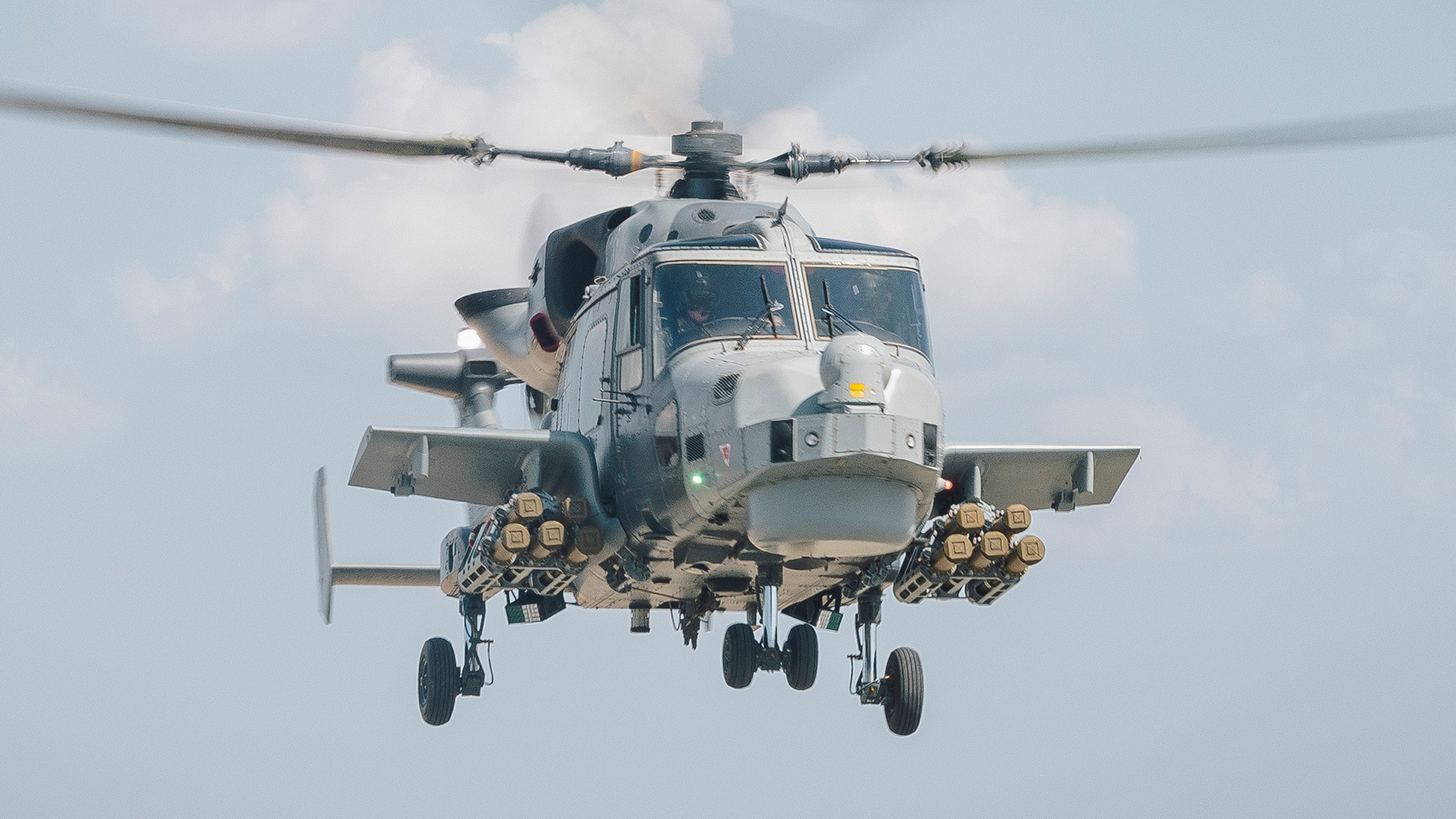
The Lightweight Multirole Missile is designed for use across multiple platforms, including helicopters, drones, ground vehicles, naval vessels and man-portable launchers. In Royal Navy service, it is known as the Martlet.
British Wildcat HMA2 helicopter aircraft are currently deployed to Cyprus, where they are equipped with the missile as part of a defensive shield protecting the island.
Weighing around 13kg, the missile uses a laser beam-riding guidance system, has a range of more than 6km, and can travel at speeds of approximately 1,850 km/h.
According to Thales, the system is resistant to countermeasures and is relatively cost-effective, a key advantage when targeting low-cost enemy drones.
Balancing Cost and Capability
The focus on LMMs comes amid concerns about the cost of intercepting drones using high-end weaponry.
A recent engagement saw a British pilot make the first UK air-to-air drone kill using an F-35B Lightning II, though the missiles used by the aircraft are significantly more expensive than the drones they target.
The LMM is seen as a more sustainable option for countering large numbers of relatively cheap unmanned aerial vehicles.
UK Response to Growing Threat
Defence Secretary John Healey said the move reflects the increasing threat posed by Iran’s actions in the region.
“Iran’s indiscriminate attacks are a threat to Britain, our allies and our partners in the region,” he said.
He added that the UK’s Armed Forces are already taking defensive action in the Middle East and emphasised the importance of the defence industry in supporting military operations.