

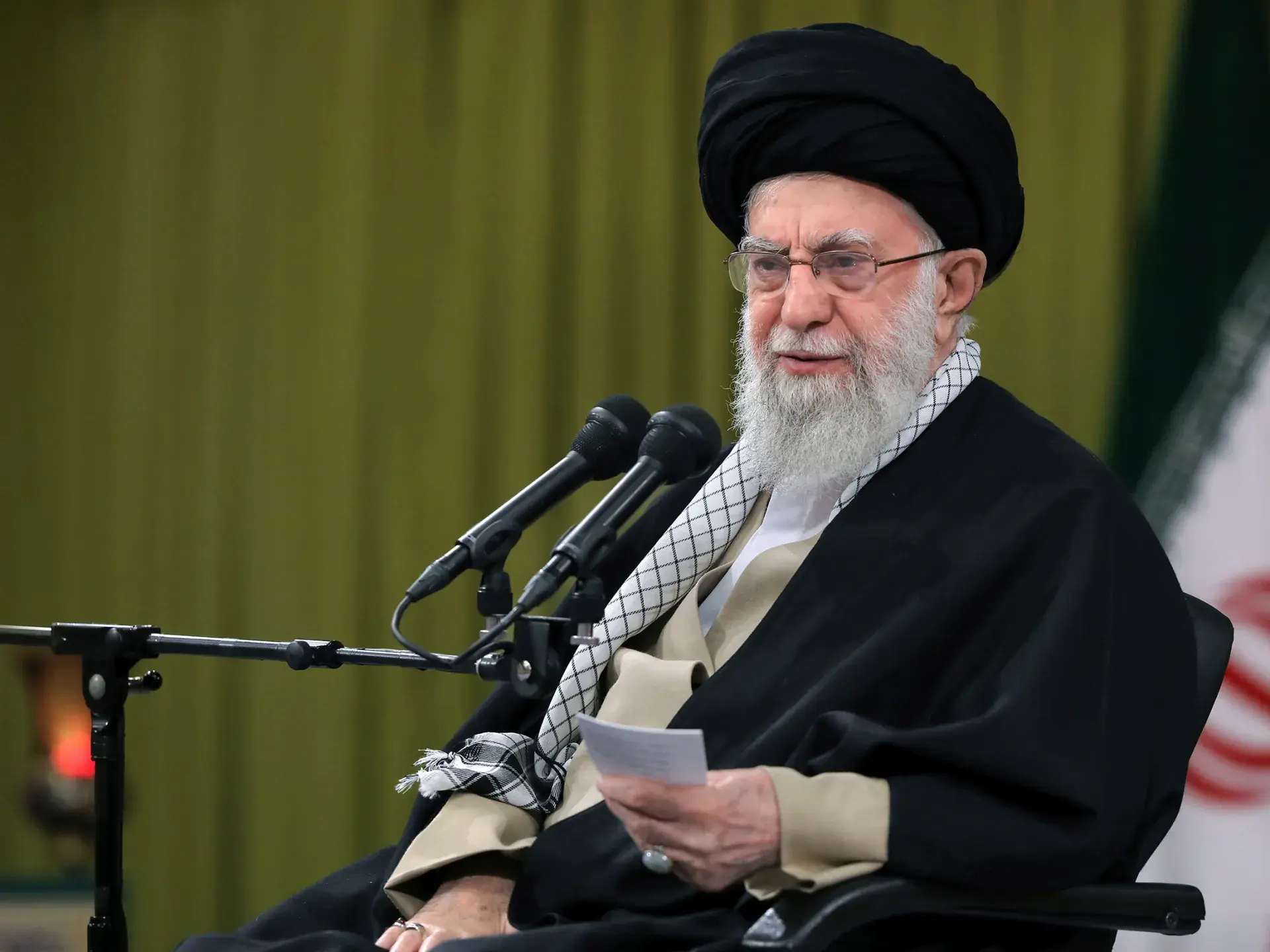
Just hours after stepping into one of the most powerful positions in the Middle East, Iran’s new supreme leader made a chilling statement, by signing his name on a missile aimed at Israel.
A photograph shared by Iran’s state broadcaster showed a projectile bearing the message: “At your service, Sayyid Mojtaba.” The message was widely interpreted as a symbolic dedication to Mojtaba Khamenei, the 56-year-old cleric who was appointed the new supreme leader of Iran on Sunday.
The image was posted on the Telegram channel of Islamic Republic of Iran Broadcasting, appearing shortly after Iran launched its first strikes towards Israel under its new leadership.
A Rapid Rise After Assassination
Mojtaba Khamenei’s appointment follows the death of his father, Ali Khamenei, who had ruled Iran for more than three decades. The elder Khamenei was reportedly assassinated in an Israeli airstrike on 28 February, a strike that has pushed tensions in the region to breaking point.
Within days of the attack, two of the most powerful pillars of Iran’s political system moved quickly to support the succession.
The influential Islamic Revolutionary Guard Corps (IRGC) and the clerical Assembly of Experts both pledged allegiance to Mojtaba over the weekend, signalling that the country’s security and religious leadership had rallied behind him.
Trump’s Warning
The appointment has already drawn a sharp reaction from Donald Trump, the President of the United States.
Trump reportedly insisted he should have been consulted on the choice of Iran’s next leader and warned that Mojtaba “is not going to last long” if he does not approve of the selection. The US president has previously described Mojtaba as an “unacceptable” candidate.
Meanwhile, Israel has made its own position clear, warning it could target whoever stepped into the role.
In recent days Israeli strikes have intensified across Iran, hitting oil and energy infrastructure and reportedly leaving parts of the capital shrouded in thick black smoke.
Fears Over “Acid Rain”
Following weekend US–Israeli strikes on oil depots, disturbing reports have emerged from parts of Iran of black, oil-contaminated rainfall.
The Iranian Red Crescent Society warned that the so-called “acid rain” could be highly dangerous. The organisation said the contaminated rainfall may settle on buildings and vehicles while causing headaches and breathing difficulties among residents.
Growing Casualties and Rising Oil Prices
According to Iran’s ambassador to the United Nations, the US–Israeli attacks have killed at least 1,332 Iranian civilians, with thousands more wounded.
The US military also confirmed that a seventh American service member has died from injuries sustained during Iran’s initial counter-attack a week earlier. The announcement came a day after President Trump oversaw the return of the remains of six other fallen soldiers to the United States.
As the conflict deepens, global markets are already feeling the strain. Oil and gas prices have surged past $100 a barrel, raising concerns about wider economic fallout.
The Power Behind the Position
Under Iran’s complex theocratic system, the supreme leader holds ultimate authority.
The role governs foreign policy, oversees the country’s nuclear programme and guides both the elected president and parliament.
For years, Mojtaba Khamenei has been viewed as a powerful figure behind the scenes, particularly within Iran’s security establishment.
But he has also been a deeply controversial one.
His name was frequently criticised by protesters during nationwide unrest sparked by the death of Mahsa Amini in 2022. Amini died while in police custody after being arrested for allegedly violating Iran’s strict dress code laws.
The protests triggered one of the largest waves of dissent in the Islamic Republic in recent years, a movement that was ultimately suppressed by the country’s security apparatus.
Now, with Mojtaba Khamenei officially at the helm, many analysts believe the world could be entering a far more volatile phase in the Middle East.