

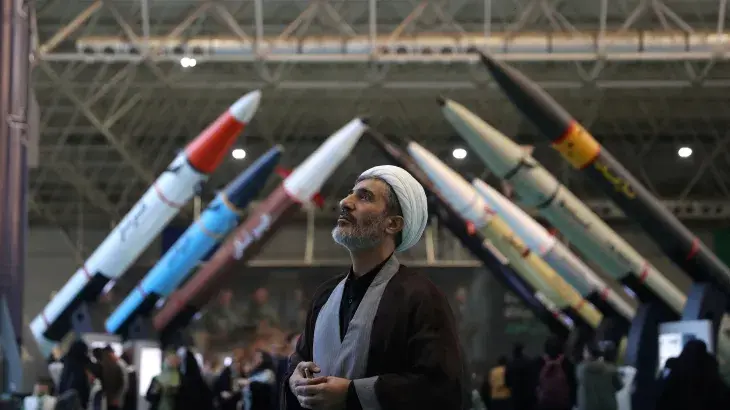
Iran has designated European Union armies as “terrorist groups” in a retaliatory move after the EU formally labelled Iran’s Islamic Revolutionary Guard Corps (IRGC) a terrorist organisation.
The decision was announced on Sunday by Iran’s parliament speaker, Mohammad Bagher Ghalibaf, who said the move was taken under Article 7 of the Law on Countermeasures Against the Declaration of the IRGC as a Terrorist Organisation.
Ghalibaf accused European leaders of acting against their own interests, saying: “Europeans have in fact shot themselves in the foot and, once again, through blind obedience to the Americans, decided against the interests of their own people.”
The escalation follows an announcement last Thursday by EU foreign policy chief Kaja Kallas, who confirmed the bloc’s decision to designate the IRGC over its role in Iran’s violent crackdown on recent nationwide protests. Kallas said the repression could not “go unanswered”, adding in a social media post: “Any regime that kills thousands of its own people is working toward its own demise.”
The protests, which began on 28 December over economic grievances, quickly grew into a wider challenge to Iran’s leadership. According to the US-based Human Rights Activists News Agency, 6,713 deaths have been confirmed during the unrest. Iranian authorities dispute that figure, saying at least 3,117 people were killed, including 2,427 described as “innocent” protesters or security personnel.
Iran has not released official arrest figures. During the height of the unrest, internet and mobile access were cut nationwide on the night of 8 January, severely limiting communication.
The IRGC, established after the 1979 Iranian revolution, operates alongside Iran’s regular armed forces but answers directly to Supreme Leader Ayatollah Ali Khamenei. It plays a central role in Iran’s internal security, foreign operations and regional influence.
Iran’s move against EU armies comes amid rising regional tensions, with US President Donald Trump repeatedly threatening military strikes and increasing the US naval presence in the Middle East. Despite the rhetoric, Trump said on Saturday that Iran was “seriously talking” with the United States, shortly after Iran’s top national security official said arrangements for negotiations were progressing.
Iranian officials have warned that any attack would trigger a “comprehensive” response. Tehran has also announced live-fire military drills scheduled for Sunday and Monday in the Strait of Hormuz, a strategically vital waterway through which around one fifth of the world’s traded oil passes.
On Sunday, Supreme Leader Ayatollah Ali Khamenei warned that a US attack would ignite a wider regional conflict. “[Trump] regularly says that he brought ships,” Khamenei said. “The Iranian nation shall not be scared by these things, the Iranian people will not be stirred by these threats.”
He added: “We are not the initiators and do not want to attack any country, but the Iranian nation will strike a strong blow against anyone who attacks and harasses them.”