

Iran’s supreme leader Ayatollah Ali Khamenei has warned that any military attack by the United States would ignite a wider regional conflict, as Washington continues to build up its military presence near Iran.
Speaking on Sunday, Khamenei said the stakes had changed, according to the semi-official Tasnim news agency. “The Americans should know that if they start a war, this time it will be a regional war,” he was quoted as saying.
The warning comes amid heightened tensions between Tehran and Washington, even as both sides signal that diplomatic contacts are continuing. US President Donald Trump said earlier that Iran was engaged in “serious discussions” and that he hoped talks would result in something “acceptable”.
Iran’s foreign minister Abbas Araghchi echoed cautious optimism in an interview with CNN, saying he was “confident that we can achieve a deal” on Iran’s nuclear programme. However, he acknowledged deep mistrust, adding: “Unfortunately, we have lost our trust [in] the US as a negotiating partner.”
Araghchi said indirect communication through friendly countries in the region was nonetheless helping to facilitate “fruitful” exchanges with Washington. Iran’s top security official Ali Larijani has also said a framework for negotiations was progressing.
Trump has repeatedly threatened to intervene militarily over Iran’s nuclear ambitions and its deadly crackdown on anti-government protests. As part of the US military build-up, the aircraft carrier USS Abraham Lincoln has been deployed to the region, with US Central Command confirming it is operating in the Arabian Sea.
Khamenei dismissed the show of force, saying: “[Trump] regularly says that he brought ships… The Iranian nation shall not be scared by these things.”
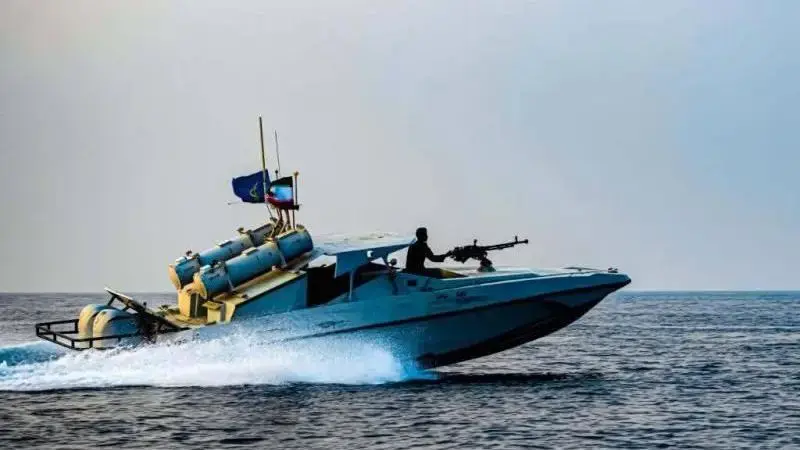
Iran had been expected to begin a two-day live-fire naval exercise on Sunday in the Strait of Hormuz, one of the world’s most strategically important shipping lanes. However, Reuters quoted an Iranian official as saying the IRGC navy had no plans to conduct such an exercise.
The Strait of Hormuz, which is just 33km wide at its narrowest point between Iran and Oman, handles around a fifth of the world’s traded oil. Iran has previously threatened to close the strait if it were attacked.
The US has warned Tehran against any “unsafe and unprofessional behaviour” near American forces in the area. Araghchi responded sharply, saying:
“The US military is now attempting to dictate how our powerful armed forces should conduct target practice in their own turf.”
Tensions were further heightened on Saturday after two explosions in Iran. In the southern port city of Bandar Abbas, one person was killed and 14 injured in a blast that local authorities said was caused by a gas leak. Tasnim denied reports circulating on social media that a Revolutionary Guards naval commander had been targeted.
In the south-western city of Ahvaz, at least four people were killed in a separate explosion, which authorities again blamed on a gas leak, according to Iran’s Tehran Times.
On Thursday, Trump said he had warned Iran that it must meet two conditions to avoid US military action: “Number one, no nuclear. And number two, stop killing protesters.”
The US-based Human Rights Activists News Agency says it has confirmed the deaths of more than 6,300 people since unrest began in late December and is investigating reports of a further 17,000 deaths. The Norway-based Iran Human Rights (IHR) group has warned the final toll could exceed 25,000.
Protesters have told reports that the crackdown by security forces was more violent than anything they had previously experienced.
In his remarks on Sunday, Khamenei accused protesters of attacking police, the IRGC, and public facilities including banks and mosques. “The coup was suppressed,” Tasnim quoted him as saying.