

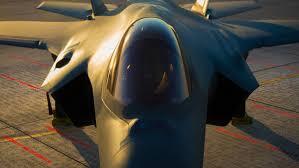
Britain’s next-generation nuclear strike capability won’t actually be in British hands. The Ministry of Defence has confirmed that the nuclear weapons assigned to the UK’s future F-35A Lightning II fleet will remain under full US control, as part of NATO’s long-standing nuclear sharing arrangements.
The clarification came after a parliamentary question from Conservative MP Mike Wood, who pressed the government on the chain of command and control of any nuclear weapons deployed on UK aircraft.
In a written response, Luke Pollard, Minister of State for Defence, said the bombs used for NATO’s dual-capable aircraft mission are “United States nuclear weapons”, stressing that the US “retains control and custody” of them at all times.
‘US Assets, Not Ours’
Pollard reaffirmed that, while the UK plans to participate in NATO’s air-delivered nuclear mission using the F-35A Lightning II, the weapons themselves remain wholly under US jurisdiction, mirroring existing arrangements among other NATO members involved in the alliance’s deterrent strategy.
“As confirmed when the Ministry of Defence announced our intention to participate in NATO’s nuclear mission, the nuclear weapons allocated to the NATO dual capable aircraft nuclear mission are United States nuclear weapons and the US retains control and custody over them, as the UK does with its own nuclear weapons,” Pollard stated.
He added that any British participation in a NATO nuclear operation would require direct political approval from London before taking place.
Nuclear Control: The Fine Print
According to the minister, any such mission would operate under the command of NATO’s Supreme Allied Commander Europe, but only once authorised by NATO’s Nuclear Planning Group, through which all allies retain political oversight.
“The UK would always retain the right to participate, or not participate, according to a political decision by the UK Prime Minister,” Pollard said.
This means that while the F-35A will be capable of carrying nuclear weapons, the bombs themselves, most likely US B61-12 gravity weapons, will remain under strict American control, with the UK acting as part of a shared NATO deterrence framework rather than an independent operator.
A Subtle but Strategic Shift
The confirmation underscores a significant evolution in Britain’s nuclear posture. Traditionally, the UK’s deterrent has been based entirely on its independent Trident submarine fleet, under sovereign control. The move to integrate air-launched nuclear capability, albeit under US supervision, signals a deepening of NATO coordination amid heightened global tensions.
For now, the Ministry of Defence insists the arrangement strengthens collective defence and flexibility. But the revelation may raise fresh questions about the extent of UK sovereignty over its most destructive potential capability.